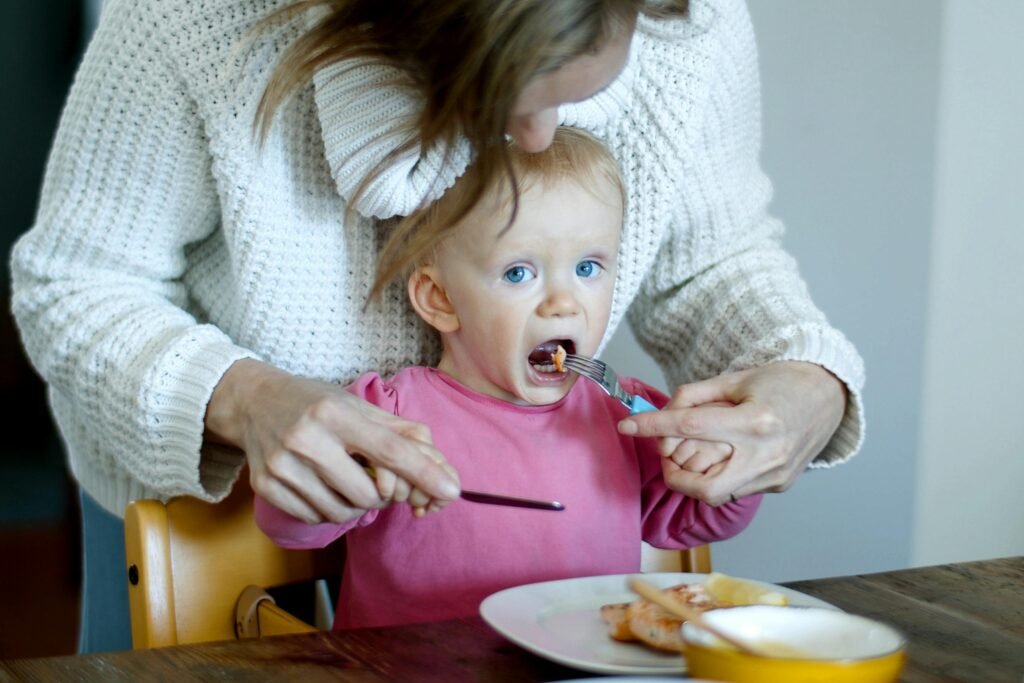
Starting your baby on solids is a huge milestone that can be exciting and overwhelming all at once. After months of exclusive breastfeeding (with the occasional bottle from my husband), I was very nervous to start my daughter on solid food. It’s scary to think that you won’t be the direct source of nutrition for your child anymore, but it’s exciting to know that they will get to explore new tastes, textures and experiences.
It can be mind-boggling trying to figure out when to start, what to offer first, and how to make the experience enjoyable for both you and baby (as I put too much stress on myself, and my daughter when we first started). I had to learn that introducing solids isn’t about perfect or fancy meals, but instead about helping baby build a healthy relationship with food and letting baby be curious to explore new foods. I’m here to share my daughter’s journey with starting solid foods.
Choking vs Gagging
One of the first steps when starting solids is to understand the difference between gagging and choking. Gagging is normal and expected—it’s a protective reflex that helps babies learn how to prevent food from going too far down their throat.
Gagging helps prevent choking and it allows babies to explore different shapes and textures of foods. When babies gag they may cough, cry, turn red or even vomit. Choking, on the other hand, is rare but serious and happens when the airway is blocked. When babies are choking they may be silent, struggle to breathe, or have an inability to cry.
I found it extremely helpful to read through the below article on choking vs gagging, as it helped me stay (relatively) calm while my daughter tried solids foods. I say relatively, as I was a basket case watching her eat her first bites of solid foods. I don’t think I gave her enough credit for learning how to eat. But with this knowledge, I was able to stay alert to the signs of true choking which helps reduce the risk as my daughter built her eating skills.
https://solidstarts.com/gagging/?hcUrl=%2Fen-US
LifeVac
When babies are gagging it is important to not stick your finger into their mouth as this can push food further into their mouth and increase the risk of choking. When gagging starts, let baby work through it on their own and push the food forward and out of their mouth. While gagging can be scary to watch, gagging is a great skill that babies need to learn to safely eat.
While choking is rare, it can happen and it is important to be prepared for an emergency. One of the most important things you can do to help be prepared for a choking baby is to learn CPR. My husband and I also found it helpful to have a choking rescue device (LifeVac) on hand as an added layer of preparedness for emergency. This can be purchased through their website.
LifeVac is a simple, safe and effective choking rescue device that can help save a life in the event of a choking emergency (if standard choking first aid is not effective). LifeVac uses suction to remove the obstruction from the airway by placing the mask over the victim’s mouth and nose, then pushing down and swiftly pulling up on the handle.
My husband and I read the instruction manual as soon as we received, and prepared with the practice device, so that we knew how to use the device ahead of time (in case we needed to use). LifeVac is not a replacement for safe feeding practices or supervision, as it’s important to prevent choking where possible (offering age appropriate food sizes/ textures and providing close supervision).
When, Where and How to Start Solids
When to Start Solids
Most babies start eating solid food around 6 months old; however, between 4 months and 6 months of age is considered standard. It’s important to discuss with your doctor. Our pediatrician told us at our daughter’s 4 month appointment that we could start feeding her solids.
However, we didn’t think our daughter (or my husband and I) were ready to start our daughter on solid foods at 4 months old. We felt more comfortable to start her around 5 months old when she was sitting well with support and holding her head up. In addition, she was showing much more interest in my husband and I eating and opening her mouth when food was offered around the 5 month mark.
We started off small, offering solid foods once a day and gradually increasing to 2-3 meals a day as she got older. Each meal was only a couple tablespoons (gradually increasing in amount), but it allowed our daughter to try different foods and learn how to eat something other than breastmilk.
Our pediatrician also helped give me some reassurance that these feedings weren’t to actually feed our daughter, as she was still getting her main source of nutrition from breastmilk, but instead was an opportunity to offer solids to our daughter to try. As the months progressed, our daughter began eating a wider variety and larger amounts of solid foods. Solid foods started to contribute more significantly to her overall nutrition and by 12 months, solid foods became her main source of nutrition with breastmilk transitioning to a supporting role.
How to Start Solids
Note: As an Amazon Associate I earn from qualifying purchases.
One of the most important tools in starting solids with your baby is a high chair. High chairs provide great support for babies who are still learning to sit up/ hold their head up. Babies can stay securely strapped in, while having the ability to explore foods in their own space.
We used the Stokke Clikk High Chair and really like it. I do not like how the legs stick out (as we’ve tripped on it a handful of times); however, the legs do offer better stability compared to other high chairs. In addition, the tray table on the high chair is a little bit small, as we’ve encountered some issues of certain plates not fitting exactly right on the tray table.
One additional tool we found very useful when starting solids was a splat mat for underneath the high chair. This helps catch any of the food our daughter drops (or throws) off the high chair, and it’s machine washable! Although, one other “tool” that helps us is our dogs—I don’t know how people feed their kids without dogs at home. Our dogs do a phenomenal job cleaning up after our daughter after each meal.
Further, another good idea for parents is to wear a bib to help prevent messes. While the typical bib goes around baby’s neck and onto their chest, we found the Tiny Twinkle bibs to be the most useful as they cover all of baby, and also have a pouch at the bottom to tuck into the high chair (and prevent food from going doing the leg holes). I do really like the silicone bibs as well, but we only used these when our daughter got older and was eating less messy foods.
Where to Start with Solids
Baby Cereal and Purees
Parents debate whether or not to start babies on baby cereal. Baby cereal provides an excellent source of iron; however, many baby cereals also contain other metals that are harmful to baby. Our pediatrician told us that we could skip the baby cereal, but after doing our own research we decided to start our daughter on baby cereal. We found the safest option at the time (Else Nutrition) and offered it to her a handful of times.
We did quickly move off of baby cereal and progress into purees. Pureed food offers a whole new world for baby. Another tool we found very helpful during the starting solids phase was the Baby Brezza Food Processor and Baby Brezza cookbook. This cookbook provided us with ample puree recipes to try (from fruits and veggies to meat and beans). I can’t remember how long we did purees with our daughter (before moving onto actual solid food—as I was extremely nervous for that), but we got great use out of the Baby Brezza Food Processor.
The WeeSprout Silicone Freezer Trays are an excellent way to store premade purees as you can easily make a batch puree, pour into mold, and place into freezer—once ready to eat, just thaw out overnight in the fridge. We purchased both sizes so we could accommodate as our daughter’s appetite slowly increased.
Other parents may jump right into baby led weaning (BLW) which is an approach whereby babies feed themselves using graspable pieces of whole food. This approach can help babies develop their motor skills and independence when eating while bypassing the purees and spoon-feeding. My husband and I were not comfortable with this approach so we did not start with BLW and opted to do the puree/ spoon feeding route.
Fruits, Veggies & Allergens
Another debate parents have is whether to start baby with fruits or veggies first. It is suggested to start babies with vegetables first before introducing fruits, to help prevent your baby from developing a preference for sweet flavors. However, for my husband and I, we didn’t buy into this myth and decided to offer both fruits and vegetables at the same time. I think one of our daughters first purees was mashed banana and then mashed avocado.
Allergies is another hot topics for parents—do you introduce allergens earlier or later in the solid food process? Common food allergens include tree nuts (peanuts being a major allergen), eggs, dairy, soy, wheat and fish/ shellfish. It can be a good idea to introduce the common food allergens to babies on the earlier side to help prevent babies from developing allergies later on. However, again, consult with your pediatrician for your own baby’s situation.
It’s important to introduce the allergens one at a time (and a few days in a row) so you can identify if there are any allergic reactions (hives, swelling, difficulty breathing). Once baby is deemed not be allergic to said allergen, continue to feed to baby regularly (to keep exposing them).
Allergens can be scary, as you have no idea what your baby might be allergic to. We were very nervous about introducing peanuts to our daughter (given the horror stories) and we even debated driving our daughter to the hospital parking lot to offer peanut butter to her. But instead we did at home, and had Benadryl on hand (in case of emergency) and a to-go bag ready to go in case we needed to go to the hospital.
Foods and Recipes
We found this First 101 Foods magnet that was a fun way to track the foods we offered to our daughter. Each food has 5 circles to check off as you offer them to your baby. The magnet gives good recommendations of foods to try (and therefore helped us grocery plan accordingly for our daughter).
As our daughter progressed on her solid food journey past purees, I needed to find “solid” foods/ meals for our daughter to try. I used the Solid Starts app which was extremely helpful in providing guidance on starting solid foods. The Solid Starts app has a comprehensive food database that shows how to safely prepare and serve hundreds of foods by age (6 months, 12 months, etc.) while also explaining choking hazards and allergens. This app helped make feeding our daughter less stressful and more enjoyable!
Another app that I turned to was the BLW Meals app. My sister-in-law had purchased a subscription and since I am on her family plan, I had free access to the app. BLW Meals app offers age-appropriate meal ideas, simple recipes and weekly meal plans, while also supporting the whole family’s meals. Similar to the Solid Starts app, the BLW Meals app also offers clear guidance on food preparation, textures and allergens.
I leveraged so many recipes from this app to help meal prep for my daughter (as almost all of the recipes are good in the freezer for 3+ months). I would make a handful of meals each weekend, freeze them and we would pack a couple of food items in our daughter’s lunch for daycare so she could continue practicing her solid food feeding at daycare.
I highly recommend one or both of these apps, as they truly do help take the guesswork out of starting your baby on solids as well as assisting with the ongoing solid foods journey for your baby.
Some of my favorite recipes from the BLW Meals app include: zucchini bites, corn nuggets, meatballs, muffins, and overnight oats. These were all a hit with our daughter, and so many were able to be stored in the freezer for 3+ months. While I hate meal prepping for my husband and I, I thoroughly enjoyed meal prepping for our daughter and making a bunch of different recipes each weekend.
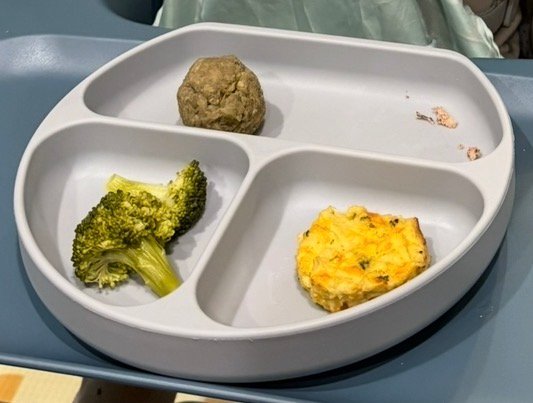
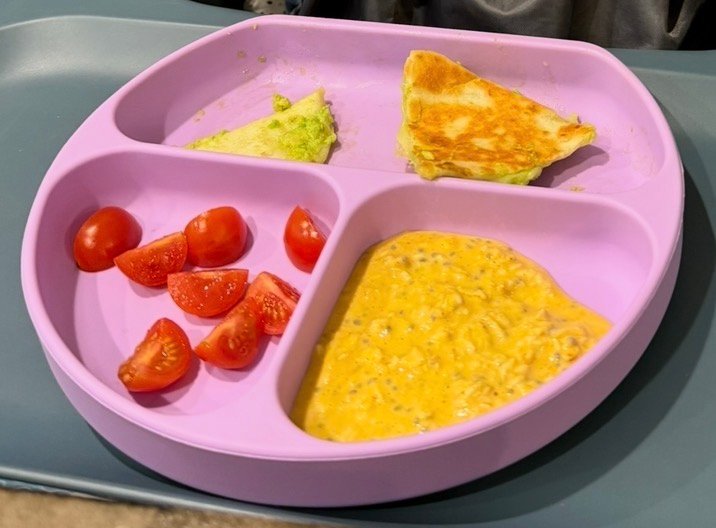
While starting our daughter on solid foods was an exciting milestone, I definitely felt overwhelmed at times. It’s hard to not compare yourself to others, and at times I was worried that I was feeding our daughter the “wrong” way because we didn’t start with BLW. But it’s important to remember that every baby moves at their own pace, and there’s no single “right” way to begin solid foods. The goal of eating is to offer your baby nutritious foods in a safe environment to help create a positive experience (for everyone).
It’s weird to think back on (and look at pictures from) the first meals we had with our daughter. Her palette has grown so much over the past year+ and it’s exciting to see her eat real food with us. Of course there are plenty of times where all she wants are blueberries and peanut butter puffs, but other times she’s open to trying the meal we made for dinner. Her chewing has significantly improved as well, especially when she started to get teeth.
Eating is a journey and our daughter is still learning what foods she likes and what foods she dislikes. We always offer her a variety of foods, but in the end it’s up to her what she eats (and I’m slowly starting to become ok with that). In the beginning, I was very stressed out about how much solid food our daughter was eating, but I’ve learned that she’s going to eat what she does and I can offer multiple options in the hopes of getting something in her belly. Cheers to continuing this journey of eating with our daughter!