Pumping was definitely one of my biggest challenges during postpartum. I’ve complained about it multiple times in previous blog posts. From learning how to use the breast pump to finding the time to fit pumping sessions into a busy day to managing the emotional toll of milk supply, it was overwhelming and isolating. Not all mommas feel this way, but I’m here to share my experience pumping as a first time mom.
The Introduction to Pumping
Pregnancy Classes
One challenging aspect of pumping is that there is very little you can do to prepare for it during pregnancy. And as you know, the Accounting Momma likes to be prepared. My husband and I took a pregnancy class on breastfeeding, which very briefly touched upon pumping, but we knew very little about pumping going into the birth.
While I read up a little bit on pumping before giving birth, I didn’t put much effort into learning about it, as my plan was to exclusively breastfeed my baby for as long as possible (which meant at least until she started daycare at 6 months old).
It was naive of me to think that breastfeeding would come naturally and that there wouldn’t be a situation where I would need to pump before 6 months postpartum. But that was my outlook, and as such, I didn’t think much about pumping while I was pregnant—I had plenty of other things to focus on.
Giving Birth
After I gave birth to my daughter, the nurses and doctors recommended hand expression (5 mins – 5x/day for 5 days). This would help increase my milk supply, and also save the “liquid gold” for future use for my daughter.
I received plenty of paperwork to take home and read, including a “Boosting Your Milk Supply” handout. As breast pumps work harder than a newborn baby, it was encouraged to pump at home to try to keep my supply growing faster than my baby’s needs.
I don’t recall when I first used a breast pump. I may have tried it in the few days after returning home from the hospital; however, as I mentioned previously, I was planning to exclusively breastfeed my daughter so I didn’t think I needed to pump.
I was fortunate that my baby latched and was able to successfully breastfeed. She took to breastfeeding so seamlessly, which made it easy to feed her that way. I exclusively breastfed our daughter for a little over 6 months; however, my husband did do 1 bottle feeding a day starting at 4 weeks old. As such, I was pumping regularly at least once a day starting at 4 weeks postpartum.
Bringing Baby Home
Note: As an Amazon Associate I earn from qualifying purchases.
While my daughter latched well, I definitely had my fair share of breastfeeding struggles. It took me a few weeks and a visit with the lactation consultant to understand how to be comfortable feeding my daughter (I had major back issues in those first few weeks). Eventually, I got the hang of it, and my daughter and I were breastfeeding regularly. The My Brest Friend breastfeeding pillow was a game changer (highly recommend)!
At baby girl’s 2 week appointment, we got the good news that she hit her birth weight and that we no longer had to wake her up every 3 hours to feed (she could let us know when she was hungry). Our daughter slowly extended her overnight sleep on her own, which then caused me to overthink pumping…
How often do I pump? Do I wake up every 3 hours and do a pumping session in the middle of the night? But what if she wakes up at hour 4 and then I don’t have enough milk for her to eat? How will pumping/ not pumping impact my milk supply? These were all questions running around in my head after we got off the ‘every 3 hour feeding schedule’ for our daughter.
I knew it was important to empty my breasts regularly to prevent my milk supply from dropping (and potentially slowing baby girl’s weight) as well as preventing the development of mastitis. But I also know that it is equally important to establish supply and demand, which is driven by baby girl.
Getting into a Routine
As our daughter stretched her overnight sleep I decided that I would wake up after ~3 hours, pump, go back to bed, and then feed her at hour 6. I did this for a while, and as my daughter stretched her overnight sleeping longer and longer, I stretched the pumping session during the middle of the night so that I only had to wake up once overnight. Thankfully we have a mini refrigerator in my office upstairs, so I would go down the hall and pump in my office (not to wake husband or baby), put the milk in the fridge and go back to bed.
After multiple weeks of this, I was getting pretty tired and wanted to know when I could just stop pumping overnight and sleep through the night when baby slept through the night. I discussed with some friends who recently had babies, as well as my lactation consultant and realized that it was ok to not pump in the middle of the night. I could see how my breasts would do not pumping overnight. Obviously, if I woke up in pain I would go relieve my breasts via pumping. To help balance supply and demand I didn’t want to pump too much, but I also wanted to make sure I had a freezer stash of milk in case needed.
At 4 weeks old, my husband started bottle feeding our daughter once a day. We eventually got into the routine that he would bottle feed baby girl during her last “regular” feed of the day around 7:00pm. As such, during that time I would pump to make up the breast milk that our daughter was consuming (6oz). We started a “dream feed” routine where I would breastfeed baby girl right before my husband and I went to bed (around 10:00pm). Afterwards I would then pump whatever was left, so that I was as depleted as possible before going to sleep (to help prevent waking up uncomfortably during the night).
This became our regular routine until our daughter went to daycare at 6 months old. This is what worked for us, but every mom and every family is different, so it’s important to find what works for you and your baby.
Breast Pumps
There are so many breast pumps on the market. From the traditional “wired” breast pumps to hands free breast pumps, as well as the original hand pumping breast pumps. It can be overwhelming figuring out which breast pump is right for you.
Hands Free vs Wired
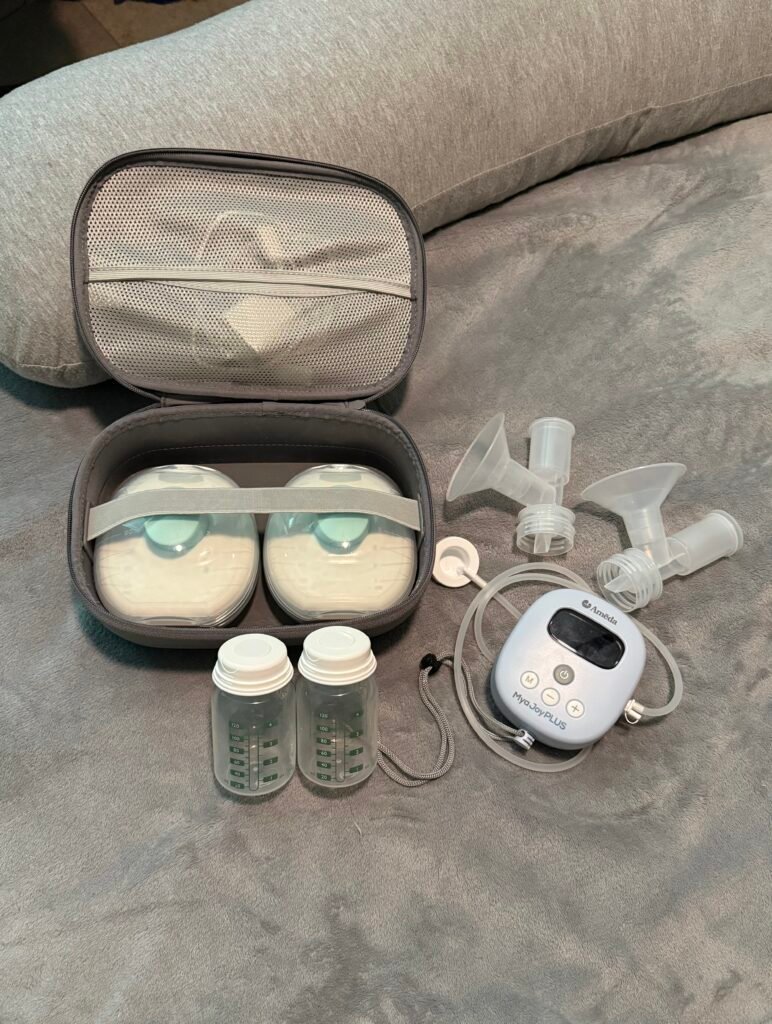
Most hospitals offer a no-cost breast pump through insurance. And honestly, I loved my Ameda MyaJoy Plus that I got through my hospital – I found that it worked better than the other breast pumps I had. I think the wired breast pumps do work very well, but they can be a pain as your breasts are essentially tied to a machine, which limits your movement.
I was fortunate to be gifted the WillowGo breast pump (as a hand-me down), which I do highly recommend as it is nice to have a hands free option for pumping. I faced some user errors as I wasn’t able to get the breast pumps put together properly each time which caused the pumping function to not work. But when it did work, it was very nice to be able to move around freely without have to be tied to a machine.
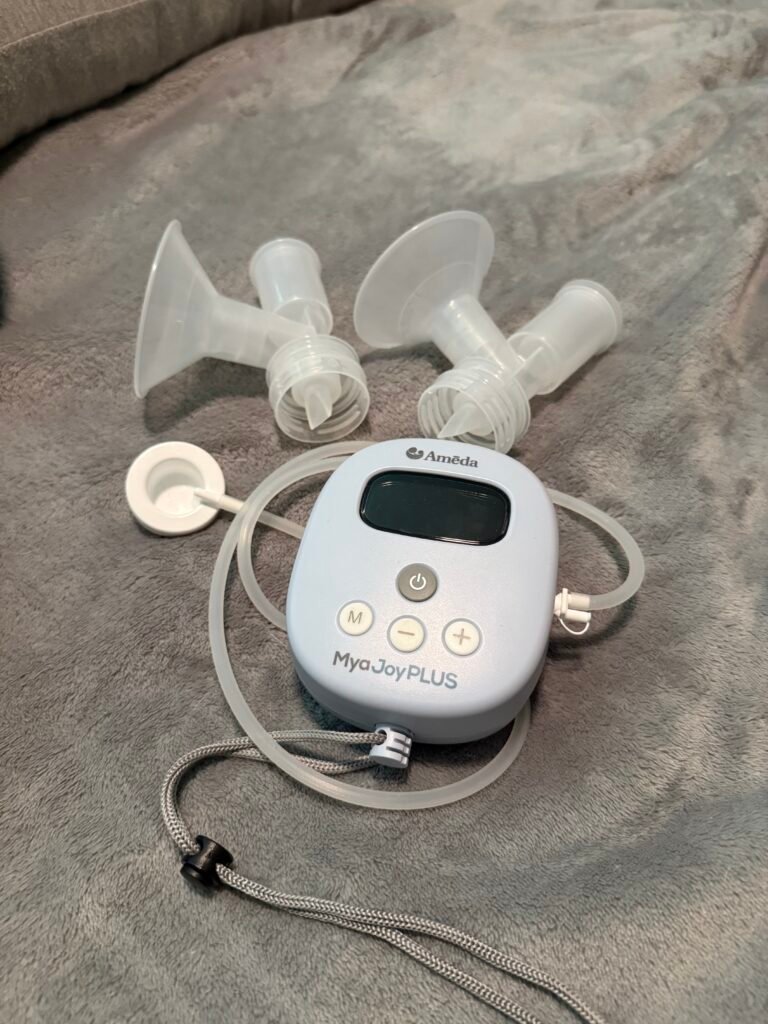
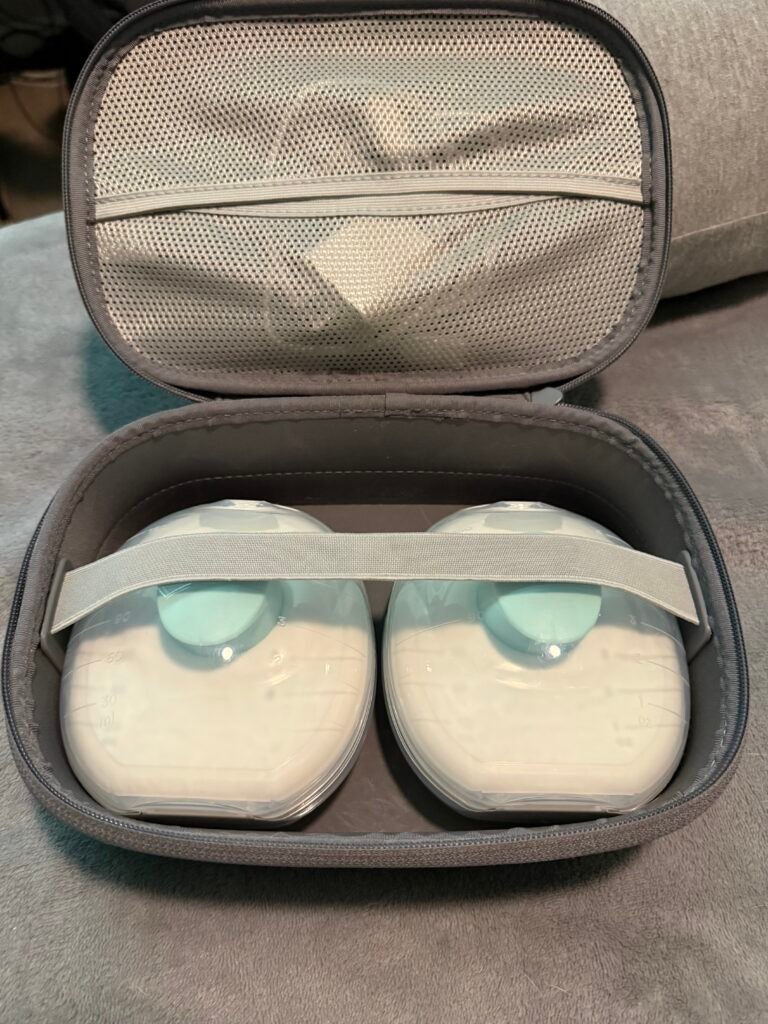
If you have the means, I think it’s great to have 2 breast pump options, both a wired option and a handsfree option. This comes in handy if you face issues with one breast pump, you don’t have to panic about not being able to express breastmilk and have another readily available option.
Learning How to Use
Wired vs handsfree breast bumps are different, but in theory they are doing the same thing — one is just battery powered. Once you get the hang of it, breast pumps can be easy to use; however, it can definitely be stressful as a first time mom trying to understand how all of the different parts fit together.
The WillowGo that was gifted to me did not come with the original owners manual, so I had to spend a lot of time on the Willow website to understand how the breast pump worked. As it was a hand-me-down breast pump, I also purchased all new parts/ pieces for it (which the Willow site makes it very easy to know which parts go with which of their breast pumps).
However, as I mentioned, I suffered from user error with the WillowGo as I couldn’t get the suction to work every time. It was hit or miss until I found out that the duckbill needs to be all the way flush against the milk container. This did resolve the problem…mostly…but sometimes I just couldn’t get it to work. There’s a chance it was the breast pump itself, as it was a hand-me-down so maybe it was old/ had some prior issue. Either way, I did enjoy the WillowGo when it worked.
The wired breast pump from the hospital was pretty easy to figure out how to use, as I had the original owners manual for it. I had fewer issues with this pump and was able to successfully get the pump to work 99% of the time (sometimes mom brain took over and I couldn’t get it to function).
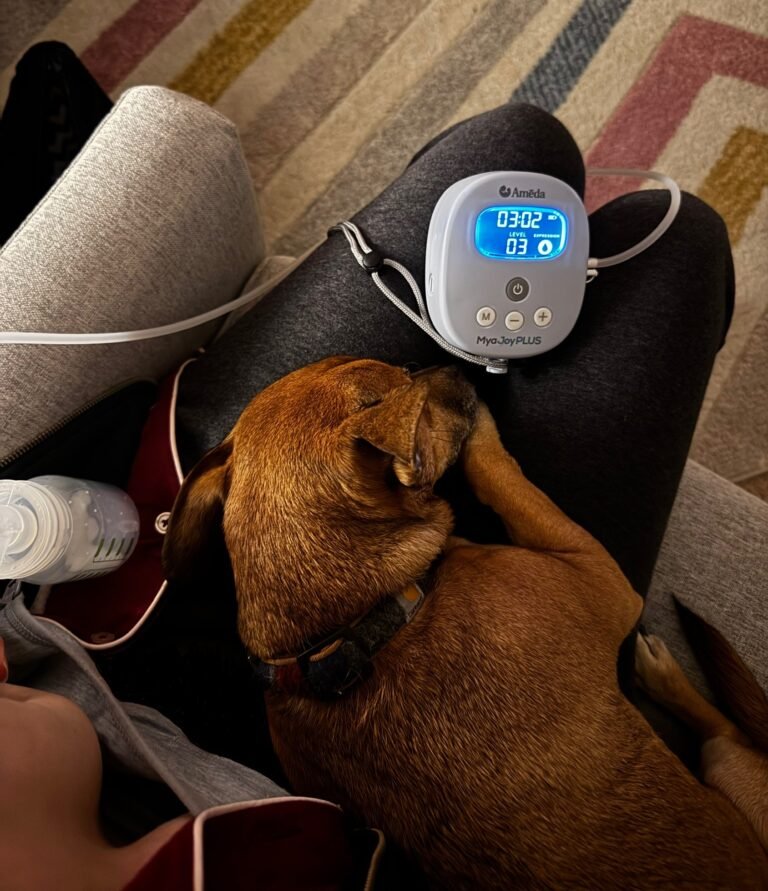
One downside to the wired breast pumps was that you have to hold the pumps in place, unless you have a pumping bra. I did purchase a pumping bra; however, I found that the bra didn’t always hold the pumps right up against my skin, which caused the suction to be less effective. As such, I preferred to pump one side at a time so only one hand was holding the pump and the other was able to move freely.
Cleaning
Another challenging aspect to pumping is the cleaning of the breast pump parts. In the early stages, during the first 6 months when I was pumping only twice a day, it was much less work. I was using the handsfree pump during the nighttime bottle feed, and then I would use my wired hospital grade breast pump right before bed. And to save cleaning up, I would single pump using the wired breast pump (i.e., I didn’t dual pump, and would have one breast going at a time—yes this took longer, but I didn’t care, as I did it while watching tv).
My husband would clean the handsfree breast pump parts every night before bed, and then the next morning I would clean the wired breast pump parts (only one set used since I single pumped). So during the first 6 months it wasn’t that bad having to clean all the breast pump parts — yes it was a daily/nightly routine, but it was only once a day. It wasn’t until I had to pump multiple times a day when our daughter went to daycare where it became more unbearable.
Pumping & Returning to Work
I discussed pumping while working in my “Return to Work” blog post (from July). The pumping struggle culminated for me when I was working full time and my daughter had started daycare (just after she turned 6 months old).
Despite returning to work in November, I was working from home while our daughter was also at home. I would schedule breaks during my work day to breastfeed her. As such, I did not have to pump during my work day. This is what worked for our family.
Starting Daycare
Once our daughter started daycare in January I began pumping during the work day to make up the bottles she took at daycare. At 6 months old she was drinking 3 6oz bottles at daycare, and I was breastfeeding her twice a day (once in the morning ~7AM and once in the evening before bed ~7PM). As such, I was trying to match my breast pumping sessions to the times baby girl would get her bottles at daycare (~10AM/ 1PM/ 4PM) in order to match supply and demand.
Supply & Demand Struggles
Trying to match breastfeeding sessions to the same times at daycare bottle feeds caused me so much more stress and heartache than I needed. While I was pumping at the bottle feeding times, I was not producing the 6oz per session (equivalent to what she was getting at daycare bottle feeds). I was still pumping right before bed (to drain my breasts before overnight sleep) and *sometimes* I would be able to make up the full 18oz required for the day, but on other days I would fall a few ounces short. I began overthinking and panicking that my milk supply was dropping.
After Googling, two ways to help improve milk supply are to 1) focus on baby during the breast pumping sessions and 2) pump more to increase demand. These options were difficult because 1) I was pumping and working at the same time, so that I did not take more time away from work (and therefore I was not able to focus on my daughter while pumping because I was trying to get my work done); and 2) I was already over having to pump 3 times a day so I really did not want to increase the number of pumping sessions per day.
Stressing out about my milk supply only made it worse, as stress definitely does not help increase supply while pumping.
Cleaning Pump Parts
Further, with pumping 3 times a day, that meant I had to clean the breast pump parts often. As a “hack” after the first 2 sessions, I would rinse the breast pump parts, dry them and store them in the fridge (to prevent bacteria growth). I would then re-use them for the other sessions. After the 3rd session, I would leave the breast pump parts by the kitchen sink and my husband would clean them that night. I would use my wired hospital grade breast pump for my last and final pumping session right before bed (and I would clean the pump parts in the morning).
Even though I wasn’t full-on cleaning the pump parts, it took time to rinse each part clean, dry off and store in the fridge. Each pumping session was 25 minutes, which I did while sitting at my desk working, and multiply that by 3x a day meant a lot of time and cleaning.
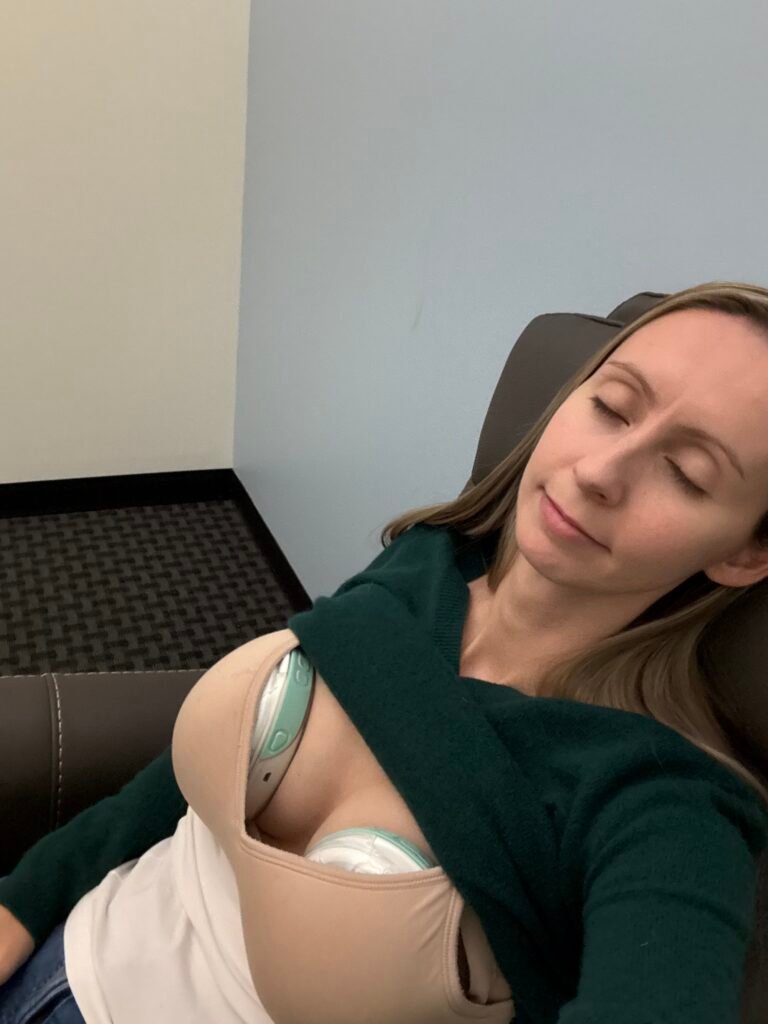
If I was going into the office for work, that was a whole different story, as I would pump in the Mother’s Room there. So each session (pumping + cleaning + storage) would be ~45 minutes…x3 was a large chunk of my day gone from pumping.
Milk Supply
While my milk supply was a concern before, it became an even bigger (and more constant) stressor when I began pumping. It’s hard to not worry whether or not you’re producing enough milk for your baby. I want to make sure my baby is fed, so when it came time to pump I was always holding myself to these numerical standards (hitting a set # of ounces a day). And each day where I wasn’t meeting the “required” number of ounces, I felt like a failure.
Introducing Solid Foods
It was around the 9 month mark where I started to see my milk supply drop a bit more, where I was only making up maybe 12oz of the “required” 18oz baby girl was drinking at daycare. Around 5-6 months old we introduced solids to our daughter. As she continued to explore solid foods, her breastmilk intake slowly decreased, which in turn caused my supply to drop.
The introduction to solid food combined with the stress of pumping 3x a day (and sometimes not meeting the “required” breastmilk output) contributed to my overall drop in milk supply. Before 6 months I wouldn’t have considered myself to be an over-producer, but I felt like I produced a decent amount of milk, as I had curated a decent freezer stash over the months (which definitely came in handy).
And while I wouldn’t have considered myself an under-producer at 6 months, I think my milk supply shifted around this time. Going from exclusively breastfeeding (with 1 pumping session a day) to having to pump 3 times a day was a major shift that definitely impacted the supply/demand. In addition, introducing solid foods will always have an impact on baby’s breastmilk intake, usually closer to 9-10 months when they’re eating more solid food than breastmilk.
I think I could have gradually transitioned to full time pumping, instead of going 0 to 100. I could have worked my way up to pumping 3x a day instead of just jumping right into it when our daughter started daycare. That’s one piece of advice I’d give my previous self if I could.
Creating a Freezer Stash
Like I said, I was able to garner a pretty decent freezer stash during the first 6 months or so. This greatly came in handy when my husband and I took our first (4 day) trip without our daughter. But it also came in handy during this 6-9 month mark where I wasn’t meeting the 18oz daily “requirement”.
During this time there was a lot of adjustment, as we had to figure out what worked best for me, as well as what worked best for our daughter. As baby girl approached 12 months old, the number of bottles she took at daycare went down from 3 to 2 to 1. As this happened, I started pumping less during the day (which was a weight off my shoulders each time a pumping sessions was removed).
Further, we introduced formula to our daughter shortly after 10 months old. We did half formula/ half breastmilk bottles for her. This made my breastmilk pumping “requirement” smaller, so I was able to pump even less during the day.
Eventually, we calculated the breastmilk we had in the freezer and how many more bottles would be required for daycare and how much formula we had, and this was able to get us to just after her 1st birthday. She then transitioned to whole milk at that time.
Pumping While Traveling
I discussed pumping while traveling during my “First Trip without Baby” blog post (from October). The decision to take a trip without your baby is difficult, and there are a lot of logistics that go into it if you are going to pump.
First Trip without Baby
We took this trip shortly after our daughter turned 8 months, so at this time I was still pumping 3x a day, and she was taking 3 bottles a day at daycare (+ 2 breastfeeding sessions with me). This meant I “should be” pumping 5x a day to meet the supply and demand that our daughter would be getting at home while we were away.
I ended up pursuing the pump & dump option while on our trip. This was due to multiple factors. First, we were traveling internationally to Mexico, and it was not clear whether or not I could even bring the breastmilk back through security. Second, the resort we were staying at did not have a freezer in the bedroom, and they did not allow me to store my breastmilk elsewhere in the hotel.
Further, this was an all inclusive resort, so I was drinking alcohol pretty consistently throughout the days, so only a couple pumping sessions would be good breastmilk to bring back. I tried to remind myself to have fun on this trip as I didn’t want to be consumed with worry about my milk supply.
As such, it was easier for me to just pump and dump. This also made cleaning the breast pump parts irrelevant since I didn’t need to keep any of the breastmilk. And given that we were in Mexico, it would have been an even bigger hassle trying to clean the breast pump parts with bottled water.
It is a personal decision to decide what you want to do, but for me the pumping and dumping worked out the best. And again, thankfully, I had a freezer stash that covered all of the breastmilk our daughter got while we were away.

Breastmilk Storage
While I didn’t travel overnight without baby for other trips, I did travel to work in the Bay Area multiple times, which was a full day away from baby (5am – 10pm). This meant I had to pump to make up the 5 bottles baby girl got while I was away.
The key to my breastmilk storage was the Ceres Chill. This is a wonderful invention made for mommas and their breastmilk! This helped keep my breastmilk chilled while I drove home from the Bay Area. Further, these reusable Ziploc bags are key to keeping breast pump parts safe and clean while storing in the refrigerator.
In addition, there were a handful of trips where I had to pump while traveling with our daughter, as I was always pumping at least once before bedtime (to drain my breasts for overnight sleep). I relied on the Ceres Chiller to get my breastmilk back home safely, and USA airports are very good with handling it through security.
Postpartum Depression and Anxiety
Around the six-month mark, postpartum depression and anxiety began to take hold. Juggling a full-time workload, my daughter starting daycare, and the shift from regular breastfeeding to pumping three times a day—four if you count the before-bed session—created an overwhelming transition that left me feeling incredibly stressed.
Pumping was physically and mentally draining for me. I was so relieved when my pumping sessions decreased, from 4x a day to 3x, to 2x, to 1x, and then to no more pumping. I could sense a shift in my happiness as the number of pumping sessions per day went down. When I was no longer pumping, even though I was still breastfeeding my daughter twice a day, I was in a much better place mentally.
And if you’re battling postpartum depression and/or anxiety, you aren’t alone. PPD and PPA are very common for mothers, and there are many resources out there to help you. And if you want to talk, my inbox is always open – just head over to my Contact page and I’ll be there!
I wish I had a better experience with pumping, I really do. I commend mothers who exclusively pump. I told my husband that I could never do that.
In the end, you will figure out what works best for you, but know that you’re not alone if you feel like pumping is taking over your life. It is an isolating and exhausting experience, but there is a light at the end of the tunnel. Further, if you don’t want to pump, you don’t have to—formula is always an option. A fed baby is a happy & healthy baby!